Do You Really Need a Screen Enclosure on Your Sarasota Pool?
October 20266 min readSwim Inc. Team
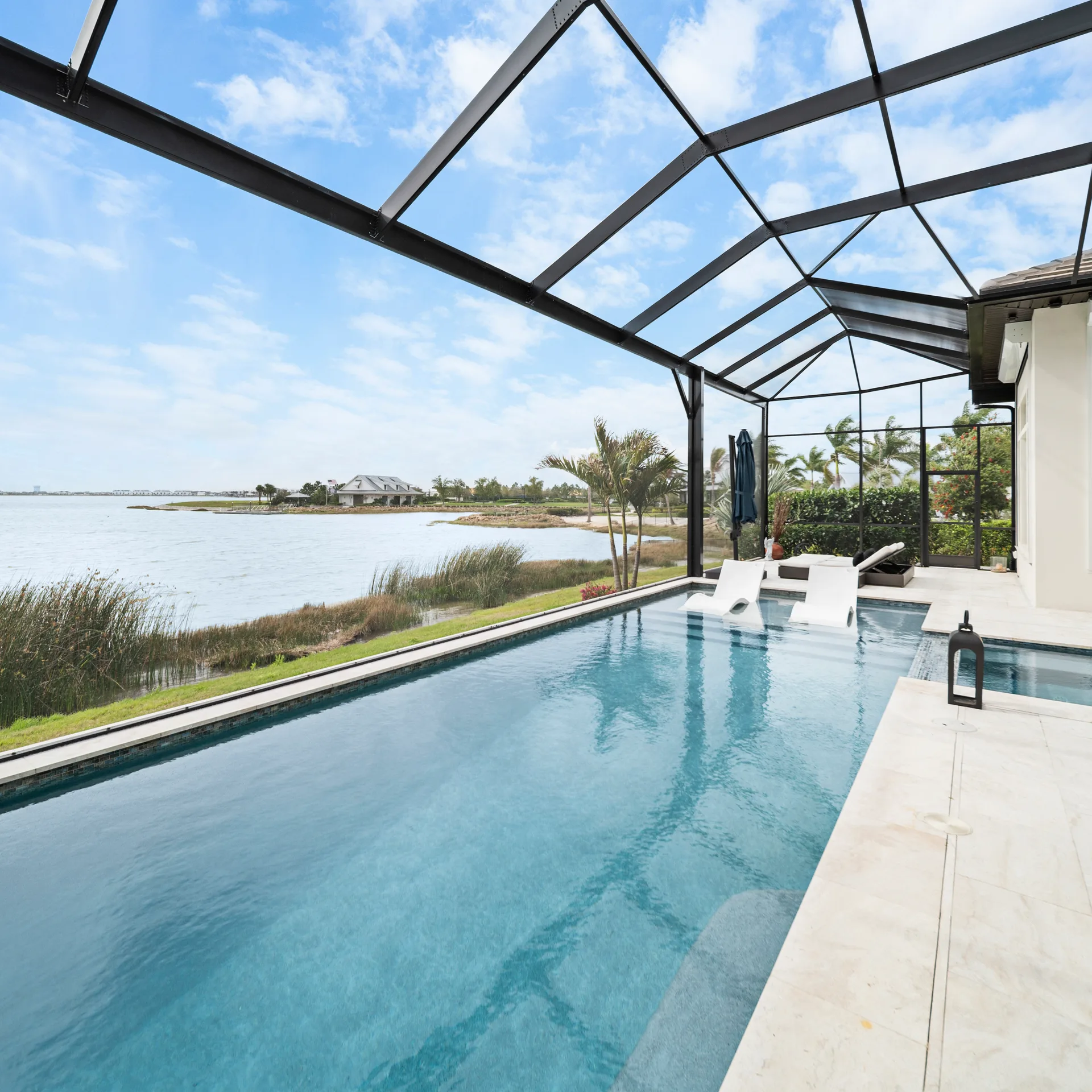
The short answer is that for most Sarasota homes, yes. A cage keeps the leaves, bugs, and wildlife out of your water, and it can count as the safety barrier Florida requires on every new pool. In our area, cages have pretty much always been a must, and I don't see that changing anytime soon.
I've been building pools in Florida since 1993, and I put a cage on almost every one of them. Here's why, and the few yards where I'd tell you to go without.
It keeps Florida out of your pool
That's the main reason people put a cage up, and it's a good one.
Without a cage, whatever is around your yard ends up in your water. Leaves, palm fronds, bugs, whatever the wind blows in. You'll be skimming it out of the pool and sweeping it off the deck all year, because we don't really get an off-season here.
Then there's the wildlife. Plenty of homes around here sit on a pond, a lake, or a canal, and in Florida that means gators. Don't just take my word for it. The Florida Fish and Wildlife Conservation Commission says alligators live in all 67 counties in the state.
I've seen what happens. We finished a pool where the homeowners fenced from the sides of the house out to the property line, but they left the back open to the pond. They ended up with an 8-foot gator in the pool. A bird in your pool is one thing. A gator is a whole different problem.
A cage closes all of that off, and your pool stays a lot cleaner.
It does double duty as your pool barrier
This is the part people don't think about. Florida requires a safety barrier on every new pool, cage or no cage.
The state's pretty clear on this. Under Florida's Residential Swimming Pool Safety Act, a new residential pool has to have at least one approved safety feature before it can pass final inspection. Your options include a barrier around the pool, an approved safety cover, exit alarms on the doors and windows that lead to the pool, self-closing and self-latching doors, or an alarm in the water.
A cage can be part or all of that barrier. Under the Florida Building Code, a barrier has to be at least 48 inches high, and the latches on gates and doors have to sit at least 54 inches off the ground. A cage built right covers that.
So if you skip the cage, the requirement just moves to a fence, alarms, or a safety cover. For most people, the cage is the simplest way to handle it, and it keeps the yard out of the pool at the same time.
Around here, almost everybody ends up with one
If I had to put a number on it, maybe 2% of the people I build for in our area go without a cage. That's a very, very low number, and there's a reason for it.
It mostly comes down to where people live. A lot of our yards back up to water or trees, and that's exactly where a cage earns its keep. I've got a homeowner north of Tampa right now who doesn't want a cage at all. I respect that. But I guarantee he'll eventually put one on because of where he lives.
That's also why the cage is part of our base design. When I quote a pool, the deck, the footers, and the cage are all in the starting price, so it's not an add-on you have to think about later. You can see how the rest of a project adds up in my Sarasota pool cost guide.
When can you skip the cage?
I'll be honest with you. I'm one of the few. I tore the cage off my own pool 15 years ago, and I don't want it back.
I've got an acre surrounded on three sides by woods. When I had the cage, it limited my sun, I felt closed in, and I had a horrible spider problem. Black widows, right there in the enclosure. One day I decided I was done with it.
So I'm not against going without. It just has to be the right yard. Skipping the cage works when all three of these are true:
- You've got scenery worth looking at. A golf course or open water, the kind of view a cage gets in the way of.
- You're not surrounded by a lot of foliage. Trees and heavy landscaping mean leaves in the water and bugs on the deck.
- You're not sitting on a large body of water. That's where the wildlife comes from.
If all three describe your yard, you can go without, as long as you plan a fence or another approved barrier from the start. If even one of them doesn't, put the cage on.
So, do you need one?
For most Sarasota homes, yes. A cage keeps your pool clean and keeps the wildlife out, and it handles the barrier Florida requires. Nearly everyone around here ends up with one.
If you've got the view and the open space, and you're not backed up to water, going without can work. I've lived without one for 15 years. Just make that call while we're designing the pool, not after it's built.
Common Questions
Is a screen enclosure required by law in Florida?
No, Florida doesn't require a cage specifically. It does require every new residential pool to have at least one approved safety feature, like a barrier, a safety cover, door and window alarms, self-closing doors, or a pool alarm. A properly built cage counts as a barrier.
How much does a pool cage cost in Sarasota?
Florida cost guides generally put a pool cage at about $12,000 to $30,000 or more, according to a 2026 Florida cost guide from Rainforest Pools. The size of your deck is the biggest factor. After that, it's the height, how close you are to the water, and upgrades like open-view. Make sure your builder quotes the cage, footers, and deck together so you're comparing the whole thing.
Will a pool cage survive a hurricane?
A well-engineered single-story cage holds up. Every cage in Florida has to be designed by a licensed engineer for its exact site, with signed and sealed drawings, before it can be permitted. Cages near open water get engineered for more wind and need a heavier aluminum structure. The screen panels are also meant to let go in extreme wind, which takes pressure off the frame, and re-screening costs a lot less than replacing aluminum.
Should I get a two-story pool cage?
I wouldn't. It can be engineered to code, but height is the biggest risk a cage has in a storm. First hurricane on a two-story, it's coming down. I recommend single-story cages in our area.
What is an open-view pool cage, and is it worth it?
An open-view cage puts posts on the outside corners of the deck, so the whole front is one open screen instead of a row of panels. The view is a lot better, and I've never lost a single-story one. Two things to know: the aluminum expands as it warms up on cool mornings and sounds like crickets chirping, and that big screen loosens in wind and rain. Plan on re-screening it every couple of years, at a couple thousand bucks a panel.
Does a pool cage block the sun?
Some, yes. Screen cuts down the sunlight that reaches your water. That's why the Florida Solar Energy Center sizes solar pool heaters differently for screened and unscreened pools. If you love a sunny deck, keep that in mind.
How long does pool cage screen last?
Generally somewhere around 7 to 15 years for standard screen, depending on the mesh and how much sun, salt air, and weather it takes, according to Daniel's Screen Service. Open-view panels need it more often.
Common Questions
Frequently Asked Questions
When can you skip the cage?
I'll be honest with you. I'm one of the few. I tore the cage off my own pool 15 years ago, and I don't want it back.
So, do you need one?
For most Sarasota homes, yes. A cage keeps your pool clean and keeps the wildlife out, and it handles the barrier Florida requires. Nearly everyone around here ends up with one.
Is a screen enclosure required by law in Florida?
No, Florida doesn't require a cage specifically. It does require every new residential pool to have at least one approved safety feature, like a barrier, a safety cover, door and window alarms, self-closing doors, or a pool alarm. A properly built cage counts as a barrier.
How much does a pool cage cost in Sarasota?
Florida cost guides generally put a pool cage at about $12,000 to $30,000 or more, according to a 2026 Florida cost guide from Rainforest Pools. The size of your deck is the biggest factor. After that, it's the height, how close you are to the water, and upgrades like open-view. Make sure your builder quotes the cage, footers, and deck together so you're comparing the whole thing.
Will a pool cage survive a hurricane?
A well-engineered single-story cage holds up. Every cage in Florida has to be designed by a licensed engineer for its exact site, with signed and sealed drawings, before it can be permitted. Cages near open water get engineered for more wind and need a heavier aluminum structure. The screen panels are also meant to let go in extreme wind, which takes pressure off the frame, and re-screening costs a lot less than replacing aluminum.
Should I get a two-story pool cage?
I wouldn't. It can be engineered to code, but height is the biggest risk a cage has in a storm. First hurricane on a two-story, it's coming down. I recommend single-story cages in our area.
What is an open-view pool cage, and is it worth it?
An open-view cage puts posts on the outside corners of the deck, so the whole front is one open screen instead of a row of panels. The view is a lot better, and I've never lost a single-story one. Two things to know: the aluminum expands as it warms up on cool mornings and sounds like crickets chirping, and that big screen loosens in wind and rain. Plan on re-screening it every couple of years, at a couple thousand bucks a panel.
Does a pool cage block the sun?
Some, yes. Screen cuts down the sunlight that reaches your water. That's why the Florida Solar Energy Center sizes solar pool heaters differently for screened and unscreened pools. If you love a sunny deck, keep that in mind.
How long does pool cage screen last?
Generally somewhere around 7 to 15 years for standard screen, depending on the mesh and how much sun, salt air, and weather it takes, according to Daniel's Screen Service. Open-view panels need it more often.
Summary
Key Takeaways: Screen Enclosures in Sarasota
For most Sarasota homes, you need a cage. It keeps debris, bugs, and wildlife out of your pool. Gators live in every county in Florida.
Every new Florida pool needs an approved safety feature. A cage can be your barrier.
In our area, very few homeowners go without one. Skipping works only with open views, not much foliage around, and no pond, lake, or canal behind you. You'll still need a fence or another barrier.
Decide on the cage while you're designing the pool. Not after it's built.
The Next Step
Not Sure a Cage Fits Your Yard?
Let's walk your lot together. We'll show you your pool in 3D with a cage and without one, so you can see the difference before you decide. Commitment and pressure free. Just a conversation about your backyard.
Commitment and Pressure Free. Just a Conversation about Your Backyard's Potential.
Keep Reading